


Start typing and press
Enter to search

Sex robot shocker: Almost HALF of all men will use erotic robot playthings, says survey

screen-shot-2017-01-01-at-3-28-10-am

By SEAN MARTIN – EXPRESS

sex-robot-745261

A shocking new report has found that almost half of men, those who are single as well as in relationships, could buy a sex robot within the next five years.Jessica Szczuka, from the University of Duisburg-Essen in Germany, co-authored research which focused on what is likely to influence men as to whether to buy a sex robots.Machines that look like women for sexual purposes are on the rise, and in countries such as Japan, it has already led to a decline in traditional sexual encounters between human beings.However, the trend is on its way to Europe and the US and it is beginning to pick up pace.

While many people would have the mindset that sex robots are for the lonely, new research suggests otherwise.

A staggering 40.3 per cent of the 263 straight males that were surveyed for Ms Szczuka’s research said that they could imagine using a sex robot within the next five years.

Ms Szczuka added that there were no differences between the responses of men who were in a relationship and those who were single.

If people have the guts to say ‘yeah I could imagine that’, thats a good sign

Jessica Szczuka

However, she added that that number might actually be higher in reality as participants might have lied.Speaking at the Love and Sex With Robots congress at Goldsmiths University in London, shequipped: “If people have the guts to say ‘yeah I could imagine that’, thats a good sign”.

sex-robot-761722

Ms Szczuka also believes that as people become more familiar with robots, that number “will double over time”.

While just under half of men could imagine buying a sex robot within five years, more than two thirds of males could imagine using them.

Ms Szczuka said that the most likely people to use one will be socially anxious people.

She said: “Someone with a fear of rejection could control the robot because the robot would never reject them.”


If you can’t trust health-related wearables, can you trust sex robots?

screen-shot-2017-01-01-at-3-34-46-am

By  – Computerworld | DEC 19, 2016 9:01 AM PT

http://www.computerworld.com/article/3150876/security/if-you-cant-trust-health-related-wearables-can-you-trust-sex-robots.html

If you can’t trust health-related wearables, can you trust sex robots to be secure and protect your privacy?

robots-humans-working-together-ts-100698237-large

The crutches used along with the robot-legs have controls like a game controller. Engadget explained, “One button would move the left leg forward, and the other would move the right. There are also buttons for sitting down, standing up and walking up and down stairs. It’s like a game controller for getting around.”

This makes me hopeful as I know many different people who need such a device, but it may be 2019 – 2020 before H-Mex is available for purchase.

Can’t trust all health-related wearable devices

While the exoskeleton seems to be more robotic-focused than some other health-related wearable devices, not all wearable devices – such as “watches, fitness bands, and so-called ‘smart’ clothing” should be trusted. In fact, researchers at the Center for Digital Democracy and American University warned (pdf) that although the ownership of health wearable devices has nearly doubled in the past year, many pose privacy risks. Big Data – data collection and marketing – is a big part of the problem with wearables.

The CDD wrote,

As their use becomes more widespread, and as their functionalities become even more sophisticated, the extent and nature of data collection will be unprecedented. Biosensors will routinely be able to capture not only an individual’s heart rate, body temperature, and movement, but also brain activity, moods, and emotions. These data can, in turn, be combined with personal information from other sources—including health-care providers and drug companies—raising such potential harms as discriminatory profiling, manipulative marketing, and security breaches.

Trust a sex robot?

If you can’t trust your fitness band, should a person trust a sex robot? Yes, it sounds like we are moving closer to that actually becoming a thing. Even a keynote speaker at the Second International Congress on Love and Sex with Robots in London is concerned about personal data which will be collected – recorded and stored – and how that data will be used.

Dr. Kate Devlin, a senior lecturer in Computing at Goldsmiths, University of London, said, “We tick the box of the terms and conditions without checking them.” Although user feedback and aggregate anonymized data collected can be helpful to improve products, Devlin asked, “Do we want people to know when we have sex and how we have sex?”

Another speaker, Oliver Bendel of the University of Applied Sciences and Arts at Northwestern Switzerland, suggested that sex robots could “over-exert their human lovers.” Even if too much robot sex didn’t kill a person, would anyone really want that data getting out there and shared, possibly used for targeted advertisements or other marketing purposes? Bendel also raised ethical questions such as if a sex robot should have moral skills or have the ability to “entice” human lovers?

As the Mirror pointed out, there are already companies that make internet-connected sex toys; We-Vibe, for example, has been accused of collecting very personal data without user consent. There needs to be a great deal of effort put into protecting sex robot consumers’ privacy, both in the robot itself and any companion app.

When you consider how hackable most IoT products are, how much security effort will go into sex robots? Surely people wouldn’t want hackers getting hold of their intimate information from such a bot? Think about how damaging it was to some people to be exposed for having Ashley Madison accounts; the company recently agreed to pay a $1.6 million settlement related to the 2015 data breach.

If not enough thought goes into building in security from the start, could a sex robot become infected with malware and added to botnets such as Mirai? Could people really attached to their sex robot be persuaded to pay a ransomware demand to use it again?

For right now it all seems a bit too science fiction for me to take seriously, but the sex bots are going to become a thing. And even if that thing doesn’t sex you to death, or turn you into a person who prefers bots-over-humans – hey it happened on HBO’s fictional Westworld – will privacy or security be built into these bots from the ground up? Or only bolted on after some disastrous breach?

To express your thoughts on Computerworld content, visit Computerworld’s Facebook page, LinkedIn page and Twitter stream.

Back to Home Beware the rise of the sex-bot – robots could ‘over-exert’ humans

screen-shot-2017-01-01-at-3-37-16-am

 – CBR Computer Business Review – 


Beware the rise of the sex-bot – robots could ‘over-exert’ humans


robot-1

Revelations come from the second International Congress on Love and Sex Robots conference held at Goldsmith’s University.


Good News: Sex Bots Just Might F*ck Everyone to Death in the Future

screen-shot-2017-01-01-at-3-39-51-am

BY  – COMPLEX LIFE

DEC 20, 2016

http://uk.complex.com/life/2016/12/sex-bots-death-future


screen-shot-2016-12-30-at-12-58-57-pm

After this bullshit of a year, what’s next? According to Swiss researcher Oliver Bendel, a very real possibility for anyone hoping to fuck some robots is death by way of said fucking.

The Second International Congress on Love and Sex With Robots, which Gizmodoreported Monday is “a real thing,” saw Bendel advising robot coitus scholars on the dangers of not implementing some serious sex bot training before the little fuckers hit the market. “If the machine over-exerts the human, it reduces the possibility of human sex,” Bendel said.

But there’s more to the dangers of robot sex, as explained by the Register:

“The proliferation of sex-robots—presumably able to incorporate data and feedback to constantly up their game—could have a physical effect on their human lovers, and beyond, he warned. Human sexuality has certain ‘physical limits’ he said, particularly in the male of the species. Robots, on the other hand, were potentially tireless. This could have a knock-on effect for a robot’s human partner, and indeed the partner’s partner.”

Additional concerns raised during the conference included whether the bot should be “available” to a human at all times and whether the bot should be required to reveal themselves as, you know, a robot. Given that sex with human beings is generally considered a wholly underwhelming experience, the excitement surrounding the early stages of the robot-fucking industry is understandable. But getting robo-fucked to the point of exhaustion, maybe even death?

Until then, maybe invest in some affordable hologram tech for your phone and/or tablet so you can start participating in holographic cam shows.


Menschen lieben Roboter: Der Sex der Zukunft?

screen-shot-2017-01-01-at-3-42-18-am

30.12.2016, 14:05
VON REDAKTION CHIP/DPA – CHIP


32aed8721d6f4966


Was undenkbar klingt, ist auf der “Love and Sex with Robots”-Messe in London das zentrale Thema: Sex mit einem Roboter. Fürsprecher sind überzeugt, dass derartige Sex-Roboter gleich in mehrerer Hinsicht bereichernd wären.


Mensch & Maschine: Ein gutes Sex-Paar?

Der Mensch liebt seine Maschinen und bald sollen sie ihn lieben. Die Rede ist von Sexrobotern. Erste Versionen wie Roxxxy sind bereits auf dem Markt. Die äußerlich wie eine Gummipuppe anmutende Maschine kann laut Hersteller True Companion reden, zuhören und reagiert auf Berührung. Die Sexroboter wirken aber noch wenig lebensecht und sind einem stereotypen Frauenbild nachempfunden. Das Thema Erotik und Maschinen ruft nicht nur die Sex-Industrie auf den Plan, sondern auch die Wissenschaft. Ein Internationaler Kongress diese Woche in London beschäftigte sich ganz mit dem Thema «Liebe und Sex mit Robotern».
Die Fürsprecher der Sexmaschinen wie Roxxy glauben, dass sie dabei helfen könnten, Prostitution einzudämmen, Sex-Unterricht zu geben und sogar Therapien zu ermöglichen. Vor allem könnten die Roboter denjenigen Menschen ein Sexualleben ermöglichen, die bislang leer ausgehen, glaubt Kate Devlin. Die Hochschuldozentin für Computing an der Universität von London ist eine der Verantwortlichen hinter dem Kongress. Sie sagt: «Sexroboter müssen gar nicht aussehen wie Menschen, wir sind momentan nur darauf festgefahren.»
Doch es gibt auch Kritiker der Roboter-Liebe. Kathleen Richardson, Initiatorin der «Kampagne gegen Sexroboter», fordert einen Entwicklungsstopp. Sie befürchtet negative gesellschaftliche Folgen. «Es lässt die Idee zu, menschliche Beziehungen seien optional, und alle Bedürfnisse könnten von Maschinen gestillt werden. Aber das stimmt nicht. Man braucht andere Menschen», sagt sie. Außerdem könnte der Einsatz von Sex-Robotern dazu beitragen, dass Menschen, vor allem Frauen, noch stärker als ohnehin schon auf Objekte reduziert werden. Dauerhaft könnte das zu mehr Ungleichheit und zu Verlust von Empathie führen, fürchtet Richardson.

“Entwicklung wird kommen”

David Levy, Experte für Künstliche Intelligenz (KI) und Autor eines einschlägigen Buches, sieht Sexroboter nicht zwangsläufig als Ersatz für menschliche Liebesbeziehungen, eher als Alternative oder Ergänzung. Die Frage sei, ob eine Beziehung mit einem Roboter besser wäre als gar keine Beziehung. Technologie ist bereits integraler Bestandteil des alltäglichen Lebens und wird dominanter. Doch möchte man Sie auch in Roboterform im Bett haben?
Die Entwicklung von intelligenter künstlicher Sexualität bringt etliche – auch ethische und politische – Fragen mit sich. «Wir befinden uns in einem frühen Stadium, wir haben all diese Fragen, die wir noch nicht beantworten können», so Devlin. Ihre größte Sorge sei das Sammeln sehr persönlicher Daten. Das erfolgt heute schon teilweise bei Sexspielzeug und könnte beispielsweise für Versicherungen interessant sein.
Wie bei allen neuen Technologien zeige sich auch hier «das Auseinanderfallen kulturpessimistischer Positionen und den eher optimistisch-gelassenen Ansichten», bringt der Vorsitzende der Deutschen Gesellschaft für Sexualforschung (DGfS) Martin Dannecker die Problematik auf den Punkt. Die DGfS habe sich zum Phänomen noch keine Position erarbeitet.
Laut KI-Experte Levy ist die Entwicklung von Sexrobotern unaufhaltsam und bis spätestens 2050 Realität. Computing-Dozentin Devlin hält Sex mit Robotern für «eine Entwicklung, die kommen wird», daher sei es besser «frühzeitig einzusteigen, um sie mitzuformen», sagte sie in Bezug auf Produkte der Sex-Industrie. Wer weiß, welche Firmen nicht schon längst daran arbeiten.
Wenn es nach Devlin geht, soll es nicht nur um Sex, sondern auch um Liebe gehen. Vielleicht könnten die Maschinen der Zukunft irgendwann dank künstlicher Intelligenz sogar Gefühle und eine Art Bewusstsein ihrer selbst entwickeln. Auf die hypothetische Frage, ob sie ihre Tochter einen Roboter heiraten lassen würde, antwortet Devlin daher: «Ja warum nicht? Wenn es sie glücklich machen würde.»

Dank Technik: Schon heute den richtigen Partner finden

Auch wenn Experten wie David Levy die Entwicklung von Sexrobotern für unaufhaltsam halten und sie bis spätestens 2050 in der Realität verankert sehen, dürften bis zur Produktion wirklich menschenähnlicher Exemplare noch einige Jahre vergehen. Wer sich alleine fühlt und sich einen Partner wünscht, sollte bis dahin nicht warten und jetzt reagieren.
Vielfach geprüft und mehrfach als Testsieger gekührt hat sich Lovescout24 (ehemals Friendscout24) zur größten Single-und Datingbörse Deutschlands entwickelt. Knapp 1 Millionen aktive, registrierte Singles tummeln sich auf der Datingplattform in Deutschland. Die Chance unter ihnen den richtigen Partner zu finden, steigt mit jedem weiteren Mitglied. Wer dahinter Abzocke vermutet kann beruhigt sein. Die Registrierung ist komplett kostenlos, sodass man gleich nach der Anmeldung mit der Partnersuche beginnen kann.

New Kissenger gadget lets you smooch through your phone screen

screen-shot-2017-01-01-at-3-19-18-am

BY  | Birmingham Mail | 22:12, 20 DEC 2016 | UPDATED 22:13, 20 DEC 2016

The service has reportedly been knocking around university research labs for the last few years – and aims to let couple kiss each other through the internet.

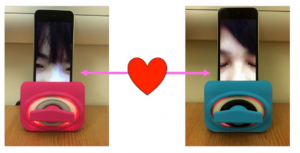
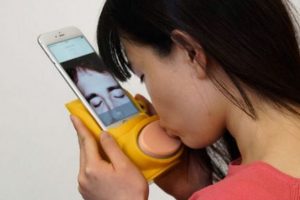
It’s a brightly-coloured smartphone holster with an inviting plastic pad attached to the bottom.

You lock lips with the pad and it transmits the sensation through to an identical holster and an identical pad that’s nestling your partner’s phone wherever that may be.


screen-shot-2016-12-19-at-172431


“Kissing is the most direct and universal expression of intimacy and affection,” explained Emma Yann Zhang, who worked on the prototype.

“It’s a way for us to bond and maintain intimacy in our relationships,” she told an audience at the Love and Sex with Robots congress as Goldsmiths, University of London.

“Also, it’s stress reducing; when we engage in this kind of intimate physical touch, we have a lower level of blood pressure.”

The Kissenger works with pressure sensors and actuators that record and transmit the your kiss to the receiving device, which recreates it for the person on the other end through an app that also features videocalling.

The creators admit that there’s still a way to go when it comes to accurately creating a long-distance makeout session.

kissenger


For starters, the pad isn’t mouth-shaped (although the actuators are lined like lips) and there’s no simulation for a tongue.

But the creators insist that it’s already helping to get people accustomed to machine-based touching.

And, moreover, that it’s not being used in an overtly sexual way.


Posts navigation

Imagineering Institute 2014