
Love and Sex With Robots Conference Sparks Controversy

screen-shot-2017-01-01-at-2-52-02-am

By Julie Wosk 

Professor and author of MY FAIR LADIES:

FEMALE ROBOTS, ANDROIDS, AND OTHER

ARTIFICIAL EVES – THE HUFFINGTON POST

http://www.huffingtonpost.com/julie-wosk/love-and-sex-with-robots-_b_13739374.html
 

screen-shot-2016-12-30-at-5-33-58-pm


Are sex robots a great development or a dangerous sign of the times? Will marriage to robots someday be legal? And how about those new gadgets, like an electronic kissing machine?

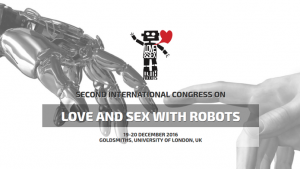
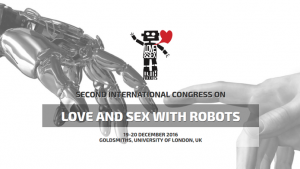
The many facets of sex dolls, electronic robots, and new interactive sex toys were the focus of the Second International Congress on Love and Sex With Robots held December 19 and 20 at the Goldsmiths campus of the University of London.

Sex robots have been hotly debated. Some see them as beneficial for people who are lonely, who have recently lost a loved one, or have disabilities. Genevieve Liveley, professor at the University of Bristol, mapped out two opposing views: David Levy, author of the 2007 best-seller Love and Sex With Robots has argued that by using sex robots, “many who would otherwise have become social misfits, social outcasts, or even worse, will instead be better-balanced human beings.” But British professor Kathleen Richardson, a co-founder of the Campaign Against Sex Robots, has countered that sex dolls objectify women, and that using sex dolls to help pedophiles and rapists displace their darker impulses is a bad idea: “people who can’t make human connections – they need therapy, not dolls.”

A new kissing device delighted the audience at the conference who ran up to try it out. Emma Yann Zhang of the City University, London along with several colleagues has developed a whimsical and fun real-time, multisensory kissing device that lets couples and family members transmit kisses over a distance. In a demonstration, when a person pressed her lips into a sensor-laden pad, the feel of the kiss was transmitted to the second person holding another pad. When asked if it felt like a real kiss, “It wasn’t wet!” noted the recipient, smiling.

Sometime in the future, the Kissenger machine may be embedded in sex dolls, making them seem even more real. Said Zhang, the device could also be helpful to users of online dating websites to gauge how good a kisser their potential partner would be.

But new sex toys could also have unexpected drawbacks. Kate Devlin, professor in the Department of Computing at Goldsmiths drew attention to a class-action lawsuit launched by an American woman against the manufacturer of the We-Vibe vibrator—a sex toy that is smartphone controlled. Turns out the Canadian-based company was violating personal privacy by collecting intimate data about the users, including the vibration settings and temperature of the device.

State University of New York professor Julie Wosk, writer of this Huffington Postblog, described “A New Breed of Sex Robots” in films, television series, and plays. In her recent book My Fair Ladies: Female Robots, Androids, and Other Artificial Eves, Dr. Wosk cited men’s quest to create a robot in the guise of “The Perfect Woman”—a robot like the ones in The Stepford Wives films that were sexy, soothing, compliant, and never had any needs or ambitions of their own. But in today’s films like Ex Machina, and in television series like the hugely popular Westworld and Humans,female robots go rogue—sometimes even committing murder in order to retaliate against abuse or to gain their own freedom.

Speakers and the audience raised tantalizing questions. For people with very busy lives, would sex robots be an occasional alternative to help make marriages easier? What do we think about a recent robot clone of film actress Scarlett Johansson, who played the warm and seductive voice of the operating system in the movie Her ?

Should we be concerned with ethical issues, like the ones raised by Swiss professor Dr. Oliver Bendel about whether sex robots have the right to say “no” to certain extreme requests? Do we agree with David Levy who has provocatively predicted that with the fast pace of robot development, marriage to robots will be legal in the year 2050, if not sooner? For that, we’ll have to wait and see.



“Love and Sex with Robots”: Menschen, Maschinen, große Gefühle

screen-shot-2017-01-01-at-2-54-52-am

Lisa-Leyla Öztürkoglu – heise online

d3f925c8f847b66e05ae63c2c9a523c6_edited_125847773_45d34b97ca-b421c3caeb50ec60

Vernetzte Technik bestimmt den Großteil unseres Alltags. Was passiert mit uns, wenn wir sie in unsere Schlafzimmer und Betten lassen? Darüber diskutieren Forscher auf dem zweiten Kongress zu “Love and Sex with Robots” am Goldsmith College in London.

Humans, Westworld, Ex Machina, Her: In aktuellen TV-Serien und Kinofilmen ist die Mensch-Maschine-Kommunikation in ihrer intimsten Form ein großes Thema. Die Pop-Kultur neigt dazu, eine mit Sex- und Liebesrobotern bevölkerte Welt als Dystopie zu beschreiben. Roboter lehnen sich gegen Ausbeutung auf, verlassen ihren Menschen oder töten gar ihren Schöpfer. Möglich wird das, weil sie über ein Bewusstsein verfügen. In der Realität ist die Technik rund um Künstliche Intelligenz (KI) noch annähernd nicht ausgereift genug, um Robotern solche Fähigkeiten zu geben.

Moralische Dilemma

Trotzdem ist Maschinen-Ethik in anderen Bereichen schon jetzt ein Thema, das für Designer und Entwickler eine Rolle spielt. Der Informatiker Oliver Bendel, Experte für Informationsethik und Maschinenethik, gab deshalb bei der “Love and Sex with Robots”-Konferenz einen Überblick darüber, welche Fragen in Bezug auf Sex-Roboter relevant sein können. Soll der Roboter zum Beispiel selbst aktiv werden und und nicht nur auf sexuelle Wünsche des Menschen reagieren? Roboter kennen keine Ermüdung, sie haben keinen organischen Körper, der ihnen Grenzen auferlegt. Damit können sie einen Menschen potenziell überfordern. Und dürfen Roboter umgekehrt auch nein sagen, sich menschlichen sexuellen Wünschen widersetzen?

Sex-Roboter nicht verbieten

Diese Probleme scheinen vielleicht noch weit entfernt. Aber vernetzte Sex-Tech Geräte, zu denen auch Sex-Roboter gehören, haben schon jetzt einen Jahresumsatz von 30 Milliarden US-Dollar und ihre weitere Verbreitung ist nicht aufzuhalten, sagt Kate Devlin. Die Informatikerin arbeitet in den Bereichen Human Computer Interaction (HCI) und KI und verteidigte in ihrer Keynote den Einsatz von Sex-Robotern. Statt die Roboter verbieten zu wollen, wie es unlängst eine Kampagne in Großbritannien forderte, setzt sich Devlin für den Dialog ein. Menschen sehnen sich nach Berührung und Zuneigung, aber nicht alle haben Zugang zu menschlichen Partnern. Alter, Behinderung oder soziale Phobien sind nur einige der möglichen Faktoren, die Menschen einsam bleiben lassen.

Devlin führt als positives Beispiel therapeutische Begleit-Roboter an, die schon jetzt in Alten- und Pflegeheimen sehr erfolgreich im Einsatz sind. Einen Schritt weiter gedacht, könnten Sex-Roboter das Wohlbefinden derer steigern, die keinen menschlichen Partner haben.

Menschlicher Kontakt durch Sex-Tech

Selbst diejenigen mit Partner können von Sex-Tech und Sex-Robotern profitieren. Die Anzahl der Menschen in Fernbeziehungen steigt stetig. Sexspielzeuge, die über das Internet miteinander verbunden sind, geben Paaren die Möglichkeit zu Intimität, selbst wenn sie in unterschiedlichen Zeitzonen leben. So präsentierte Emma Yann Zhang Kissenger, einen Mobile Kiss Messenger. Nutzer brauchen die Kissenger-Hardware, eine Art Schale, in die das eigene Smartphone gesteckt wird. Auf einer ovalen Fläche können die Nutzer ihren Kuss platzieren, der dann beim Empfänger als individueller Druck ankommt, während sie über eine App auch Video und Ton austauschen.

Erkenne dich selbst

Wird Sex mit Robotern also menschliche Intimität bald vollständig ersetzen? Die Wissenschaftler sehen es positiver: Durch den Kontakt mit Sex-Robotern hat der Mensch die Chance, sich selbst besser kennenzulernen und eigene Bedürfnisse zu formulieren. Das führt letztlich zu einem gesünderen Umgang mit der eigenen Sexualität – ob mit oder ohne Sex-Tech im Schlafzimmer. (kbe)


Sex Robots May Literally Fuck Us to Death

http://gizmodo.com/sex-robots-may-literally-fuck-us-to-death-1790276123


qsitwrbnz3azo9nebhgn

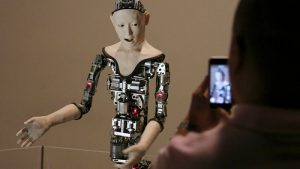
This is not a sex robot. Yet. Image AP Photo/Koji Sasahara

At the Second International Congress on Love and Sex with Robots (a real thing) Swiss researcher Oliver Bendel cautioned an audience of prospective robot-fuckers that “If the machine over-exerts the human, it reduces the possibility of human sex.”

In other words, sex bots are coming. And one way or another they’re going to fuck us to death.

Bendel noted that robots, unlike humans, don’t tire out. If issues of robot ethics aren’t addressed before these sentient Fleshlights hit the market, they could either screw us to the point of physical exhaustion, or be so much better at sex than real people that humanity might stop boning entirely.

Given the present state of teledildonics (the unfortunately named industry of internet-connected sex toys) cybergigolos are a long way off. Although if human stupidity is any indicator, we won’t bother answering the questions around their ethical construction until it’s already too late. When alien visitors finally reach Earth, they will find only a barren wasteland of broken down robot prostitutes and the neglected remains of the dumb, fleshy creatures they were too good at serving.


London university Goldsmiths hosts conference on ‘ethics of having sex with robots’

screen-shot-2017-01-01-at-2-58-27-am

NAOMI ACKERMAN – 

http://www.standard.co.uk/news/london/london-university-goldsmiths-hosts-conference-on-ethics-of-having-sex-with-robots-a3424321.html

A London university is hosting world experts on loving and having sex with robots this week.

The two-day conference, which has been banned in Malaysia, will address the ethics around sexual relationships with robots and includes a talk on ‘teledildonics’ called Teletongues – lollipop devices for remote oral interaction.

Event organiser Dr Kate Devlin, senior lecturer in computing at Goldsmiths, has previously written about sex robots’ potential to help sex offenders.

She told the Standard: “It may be have a controversial or trivial-sounding topic title, but this is an academic conference area with a lot of growth and development.

“Sex technology is a huge industry worth billions of dollars worldwide. Humanoid sex robots are more niche, they are only manufactured in the US and Japan at the moment.

gettyimages-459229772

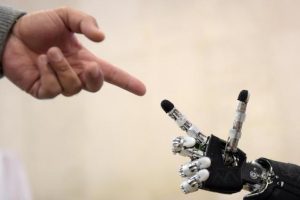
Humans and robots: A two-day conference will look into the ethics of having sexual relations between the two. (AFP/Getty Images)

“There are several important things to consider with these robots. Is it ethical to make machines to have sex with? At the moment there is not much interactivity with sex robots, they are just sex dolls, they are not sentient. But with artificial intelligence, in the future we will be able to create robots that think for themselves.

“Another thing to consider is who collects the data from the robots? Will we have privacy? Even vibrators are starting to collect data.”

Having relationships with robotic technology became a topic of debate after the release of Scarlett Johansson film ‘Her’ in 2013,  a romantic sci-fi drama whose main character falls in love with his female intelligent computer operating system.

Dr Devlin added: “We need to fully understand the ethics and therapeutic uses of sex with robots and where it’s going in a diverse and equal manner.

“A lot of technology now is being created by men and for men but they are just mechanised sex dolls, the stereotypical seductive woman – though the market for sex toys is evenly split between men and women.  Why can’t we explore new forms of sex robot and less heteronormative ones?

“Also, these robots could help people who cannot normally form relationships and provide them with a form of intimacy they would not otherwise have.”

The conference is taking place today and tomorrow at the university New Cross campus, with keynote speaker artificial intelligence and industry expert David Levy.


How Sex Bots Will Change Human Sex

screen-shot-2017-01-01-at-3-01-40-am

Dispatches from the Second International Congress on Love and Sex with Robots.

3b866b4b00000578-0-image-a-13_1482178256625-1


Sex With Robots Will Be ‘Socially Normal’ By 2040, Says Technology

screen-shot-2017-01-01-at-3-04-03-am

During yesterday’s International Congress of Love and Sex with Robotics, scientists revealed that sex with artificial intelligence will play a mainstream role in the bedroom in the near future, and now we have an irrational fear of the hoover

1482248167-exmachina

BY

For anyone who has become hooked on Westworld – the HBO science fiction western thriller series which sees rich vacationers visit a futuristic park where robotic ‘hosts’ are slaves to their violent and sexual fantasies – you might want to look away now, as the nightmare is about to become a reality, according to technology experts.

Speaking yesterday at the International Congress of Love and Sex with Robotics at the Goldsmiths campus of the University of London, Dr Trudy Barber – a leading expert in the impact of technology on sexual intercourse – announced that artificial intelligence (AI) machines in sex will be ‘socially normal’ within 25 years.

giphy

Comparing the use of robots in the bedroom to increased popularity of the ebook, Barber explained that people’s growing obsession with technology meant that it wasn’t going to take long before it became a common factor in the bedroom and that the science would enable people to better appreciate ‘the real thing’.

That being intimacy, love and sexual attraction with a real-life human being, we presume.

Barber said: ‘It could be that we are so busy with our lives, we are so embedded in our technological narrative that the idea of engaging in long-distance sex and robot sex is actually a natural process in our evolutionary cycle.

‘I THINK WHAT WILL HAPPEN IS THAT THEY WILL MAKE REAL-TIME RELATIONSHIPS MORE VALUABLE AND EXCITING.’

Yeah, tell that to the partner who walks in to find their other half straddling a human-like remote control and see how ‘exciting’ that makes their sex life.

giphy-1

To make matters worse, Love and Sex with Robots author David Levy has suggested sex robot manufacturers might soon be able to create made-to-order identical models of celebrities that mimick real-life behavior and personality traits.

And, while it might sound a preposterous theory, already this year one robotics enthusiast spent £34,000 to create a doll made in the likeness to Scarlett Johansson, which apparently smiles and giggles like the Lost in Translation star.

But, while you might be looking at every technological item around you right now and questioning whether one day you could find your boyfriend or girlfriend making love to a pimped up version of the iPhone 5, there are many AI experts who challenge the belief that sex robots will become mainstream in the future, despite surveys showing that around 10 per cent of people would like to use them.

giphy-2

Yesterday, Professor Noel Sharkey – a scientist and former advisor to the UN who, in June, called on governments to stop robotics being influenced by the sex industry – said of sex bots: ‘They are more likely to be viewed as tools for masturbation although having a humanoid body may make a difference to the fantasy.’

He also explained that similar to prostitution, which still remains a taboo issue despite it being a thousands of years old practice – robots for sex won’t be viewed as the norm any day soon.

‘With sex robots and prostitution, you are having a one way relationship with an object or a person that does not return your love except by pretence,’ he revealed.

giphy-3

However, despite expert protestation of the technology, Dr Barber assures society that robots will become an ‘extra human’ race.

‘The question is not ‘when will it become acceptable’ but ‘when will we integrate’,’ she said.

Anyone else now scared of their electric toothbrush or is it just me?


Posts navigation