
Kissinger, il dispositivo che invia i baci con lo smartphone

screen-shot-2017-01-08-at-6-55-06-pm

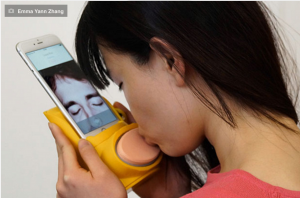
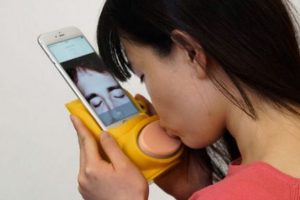
Una superficie in silicone registra pressione e durata del bacio per poi riprodurla su un dispositivo simile
screen-shot-2017-01-08-at-6-56-37-pm


Kissinger

Non è facile esprimere i propri sentimenti in chat. Quando le parole non bastano siamo soliti ricorrere alle emoji ma se anche queste non sono abbastanza, cosa fare? Bé, c’è Kissinger.

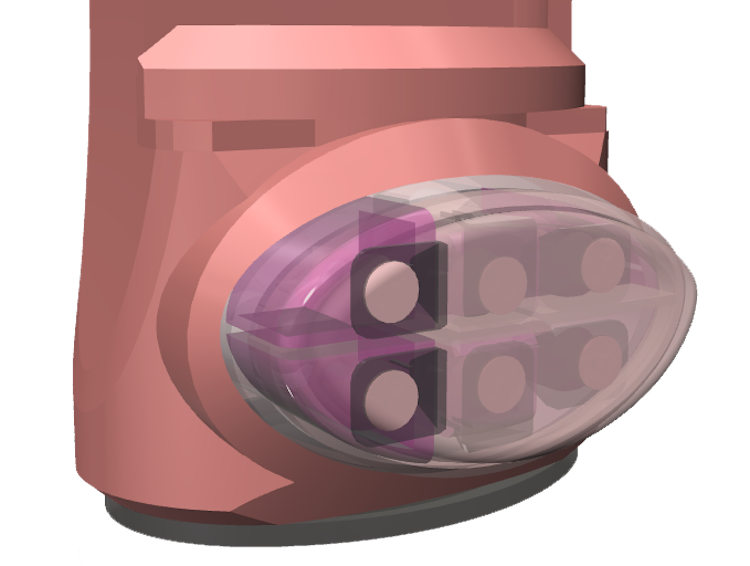
Curiosa idea made in UK, è una cover che si connette al telefono e ti permette di spedire baci realistici a un altro utente dotato del Kissinger. La cover, sotto, ha una parte in silicone dotata di pistoncini e sensori su cui poggiare le labbra. Questa registra pressione e durata del bacio mentre il destinatario può poggiare la superficie in silicone su labbra o guancia per sentire sulla pelle una riproduzione del bacio ricevuto.

Va detto che al momento Kissinger è solo un prototipo, non può essere acquistato e, a dirla tutta, non sappiamo neanche quanto il bacio sia realistico. Per saperlo bisognerà aspettare che gli ideatori, due ricercatori dell’Imagineering Lab della City University of London, lo facciano diventare realtà. Per ora quindi non ci rimane che consultare il sito web dedicato per conoscere ogni aggiornamento in merito.
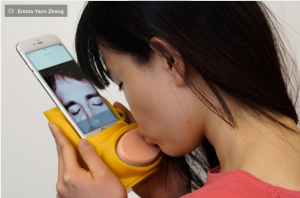



Kissenger: The iPhone app with an associated gadget that acts as a ‘kiss messenger’

screen-shot-2017-01-08-at-10-56-35-pm

30 Dec 2016 , 10:22 – Tech 2

http://tech.firstpost.com/news-analysis/kissenger-the-iphone-app-with-an-associated-gadget-that-acts-as-a-kiss-messenger-355404.html

screen-shot-2017-01-08-at-10-53-24-pm

Image: Kissenger

You can now send a physical kiss to your long-distance lover over the internet, thanks to a new smartphone gadget developed by researchers.

The device, known as Kissenger, works with pressure sensors and actuators.

It records the user’s kiss and transmits it to an identical receiving device, which recreates it for the person on the other end through an app that also features videocalling.

“Kissing is the most direct and universal expression of intimacy and affection,” said Emma Yann Zhang, who worked on the prototype as PhD student at City University London.

“It’s a way for us to bond and maintain intimacy in our relationships,” she said.

“Also, it stresses reducing; when we engage in this kind of intimate physical touch, we have a lower level of blood pressure,” Zhang was quoted as saying by the ‘Mirror’.

Parents can also use Kissenger to give their children a kiss on the cheek when they are away at work, researchers said.


Long-distance love made easier with Kissenger, the virtual kissing gadget

screen-shot-2017-01-08-at-10-51-50-pm

By

http://www.digitaltrends.com/cool-tech/kissenger-pressure-sensors-actuators/

screen-shot-2017-01-08-at-10-53-24-pm

Long-distance relationships are hard. Even though smartphones and the internet help bring us closer, physical contact can make all the difference.

A new device called Kissenger hopes to bridge the gap separating long-distance loved ones. Developed by researchers in Adrian David Cheok’s Imagineering Lab and Imagineering Institute in Iskandar, Malaysia, Kissenger simulates a kiss using pressure sensors and actuators, while users are video chatting through an iOS application.

“The Kissenger device was built for people to better express intimacy and emotion remotely through internet kissing,” Emma Yann Zhang, a PhD student at City University London, told Digital Trends. “It aims to fill in the missing dimension of touch in traditional digital communication, which largely focuses on verbal and audio information. We believe that physical touch is the most important channel to communicate one’s emotions and to maintain close relationships with your loved ones on the other side of the world.”

Kissenger isn’t the first of such devices to emerge from the Imagineering Lab. Cheok’s past projects have included the Huggy Pajama and RingU, both of which digitally transmit the sensation of touch from one wearer to another.

To be sure, these devices aren’t exclusively designed for couples. Zhang insists families could benefit from the added affection as well. And it apparently isn’t limited to human-human interaction, either.

The researchers demonstrated Kissenger last month at the Love and Sex With Robots conference in London, where experts and enthusiasts discussed the growing implications of sexualized androids. In that vein, the Imagineering Lab is also planning to integrate the device into a kissing humanoid robot with interactive lips. “With new types of technologies and interfaces that enable physical intimacy between humans and robots,” Zhang said, addressing a subject that remains controversial, “I believe that we can form more humanistic and intimate relationships with robots.”

For now the researchers are looking for commercial partners and investors to bring Kissenger to market so you too can soon smooch your long distance partner.


Kissinger, il dispositivo che invia i baci con lo smartphone

screen-shot-2017-01-08-at-6-55-06-pm

Una superficie in silicone registra pressione e durata del bacio per poi riprodurla su un dispositivo simile

screen-shot-2017-01-08-at-6-56-37-pm


Kissinger

Non è facile esprimere i propri sentimenti in chat. Quando le parole non bastano siamo soliti ricorrere alle emoji ma se anche queste non sono abbastanza, cosa fare? Bé, c’è Kissinger.

Curiosa idea made in UK, è una cover che si connette al telefono e ti permette di spedire baci realistici a un altro utente dotato del Kissinger. La cover, sotto, ha una parte in silicone dotata di pistoncini e sensori su cui poggiare le labbra. Questa registra pressione e durata del bacio mentre il destinatario può poggiare la superficie in silicone su labbra o guancia per sentire sulla pelle una riproduzione del bacio ricevuto.

Va detto che al momento Kissinger è solo un prototipo, non può essere acquistato e, a dirla tutta, non sappiamo neanche quanto il bacio sia realistico. Per saperlo bisognerà aspettare che gli ideatori, due ricercatori dell’Imagineering Lab della City University of London, lo facciano diventare realtà. Per ora quindi non ci rimane che consultare il sito web dedicato per conoscere ogni aggiornamento in merito.
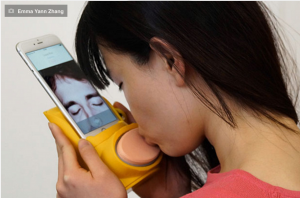


Agora já é possível beijar à distância pelo telemóvel

screen-shot-2017-01-04-at-9-46-22-am

2016-12-29 13:21 – Redação / CS

http://www.tvi24.iol.pt/tecnologia/kissenger/agora-ja-e-possivel-beijar-a-distancia

Kissenger é um novo aparelho que permitirá aos utilizadores enviarem e sentirem beijos à distânci

Batizado como Kissenger, uma mistura de Kiss (beijo) com Messenger, este novo aparelho permite aos utilizadores beijarem-se à distância.

O aparelho, que é uma espécie de almofada em silicone, deve ser acoplado ao smartphone. Para enviar um beijo, terá de beijar a almofada e esperar que a pressão seja identificada pela aplicação. Depois de identificada, o sinal é enviado para outro dispositivo e o beijo será reproduzido da forma mais real.

De acordo com o Mashable, o aparelho criado por estudantes universitários, em Londres, ainda é um protótipo e parece só estar disponível para iOS.


Kissenger permite beijar à distância

screen-shot-2017-01-04-at-9-39-49-am

29.12.2016 às 10h08 – Exame Informática

http://exameinformatica.sapo.pt/noticias/insolitos/2016-12-29-Kissenger-permite-beijar-a-distancia

Ogadget Kissenger tem sensores e simuladores que permitem a um utilizador beijá-lo e a outro, à distância, receber esse beijo. O beijo “digital” não envolve língua e replica um beijo na face ou nos lábios, explica o The Verge.

O aparelho é comercializado em conjunto com uma app e consiste num pedaço de silicone que deve ser ligado a um tablet através da entrada jack 3,5mm, habitualmente dedicada aos auscultadores. O utilizador deve encostar os seus lábios ao silicone que mede a pressão em determinados pontos e replica-a no Kissenger do recetor.

Nesta fase, ainda não passa de um protótipo, criado apenas para iOS, e não há qualquer indicador sobre a disponibilidade comercial deste gadget.

Veja um vídeo publicado pelo The Gadget Show, no YouTube, sobre o Kissenger.


Posts navigation