
Beyond Teledildonics: The Future of Sex is the ‘Internet of Bodies’

playboy

By Alice Bonasio – 

http://www.playboy.com/articles/the-future-of-sex-is-the-internet-of-bodies

c_fit,h_1280,q_80,w_720http-images-origin.playboy.comogz4nxetbde6f99WkLkQpMU6SIOMuWqGQ2a6e6ee2cbf8328134e53b93f224858dRobots_main
Carol and Mike Werner / Alamy Stock Photo


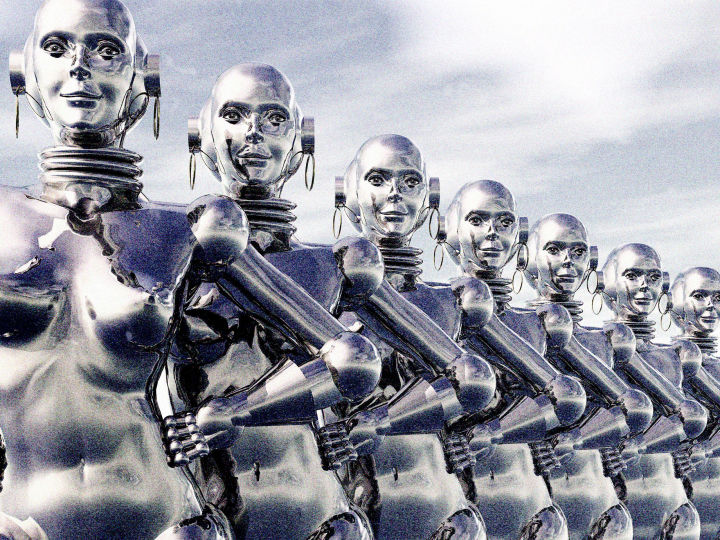
We’re experiencing a huge surge of interest in the field of Human-Robot interaction, reflected not only in the news but in the barrage of cyborg-themed films and TV shows filling our screens. What they all have in common—from Westworld to Humans, Ex Machina to the highly anticipated Blade Runner sequel—is a fixation on what our relationship with machines will look (and feel) like in a future that is both dystopian and titillating.

So it was no real surprise that the Second International Congress on Love and Sex With Robots, held last December at the University of London, attracted a lot of attention. With the adult entertainment industry already evolving virtual reality much more quickly than it evolved streaming video or webcams, and advances in fields like Natural Language Processing (NPL), we are getting much closer to the point where artificial intelligence will be able to pass the Turing Test and become effectively indistinguishable from human intelligence. We might have once laughed at the concept of Woody Allen’s Orgasmatron, but sex with robots is pretty much a foregone conclusion—and it will probably happen much sooner than experts previously thought.

In fact, David Levy says that when he first wrote the book that eventually inspired the conference, he predicted that the first human-robot marriages would occur by 2050. When asked the same question at the conference, he told the audience it is entirely possible this will happen much sooner.

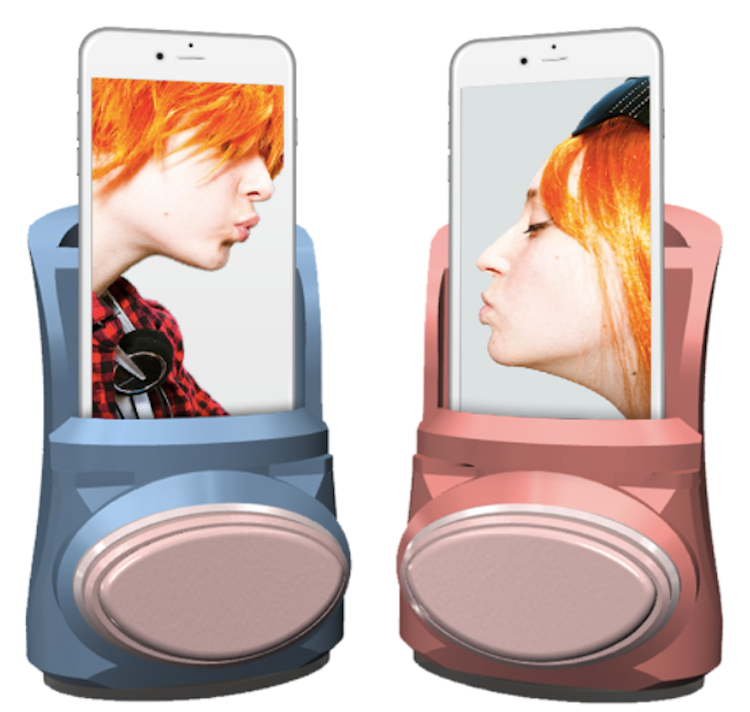
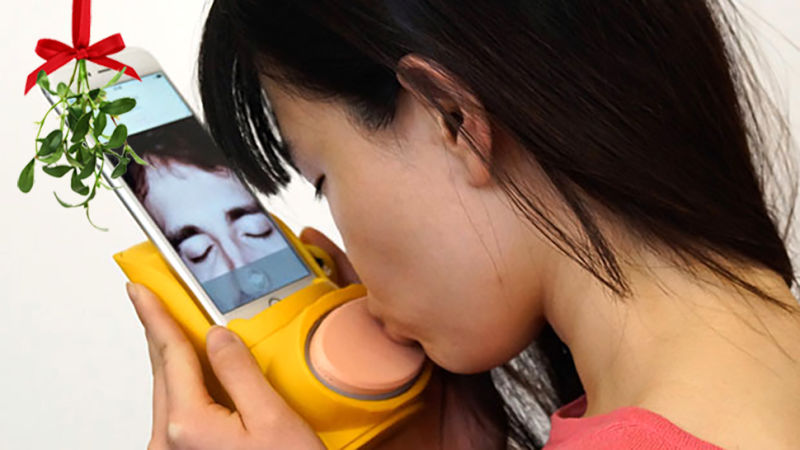
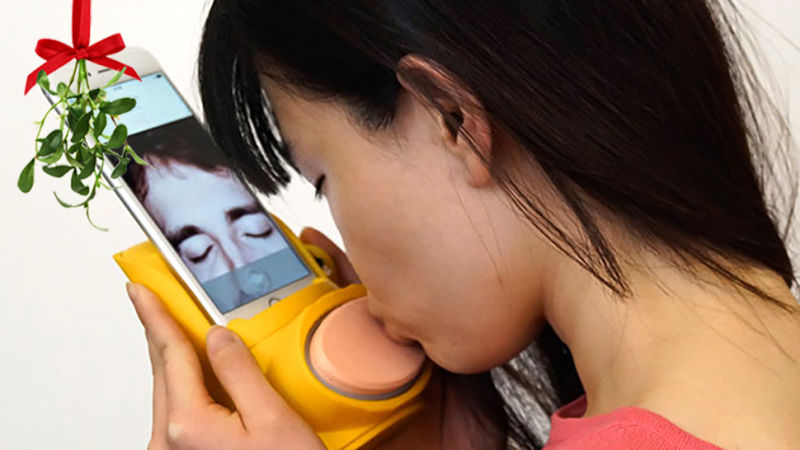
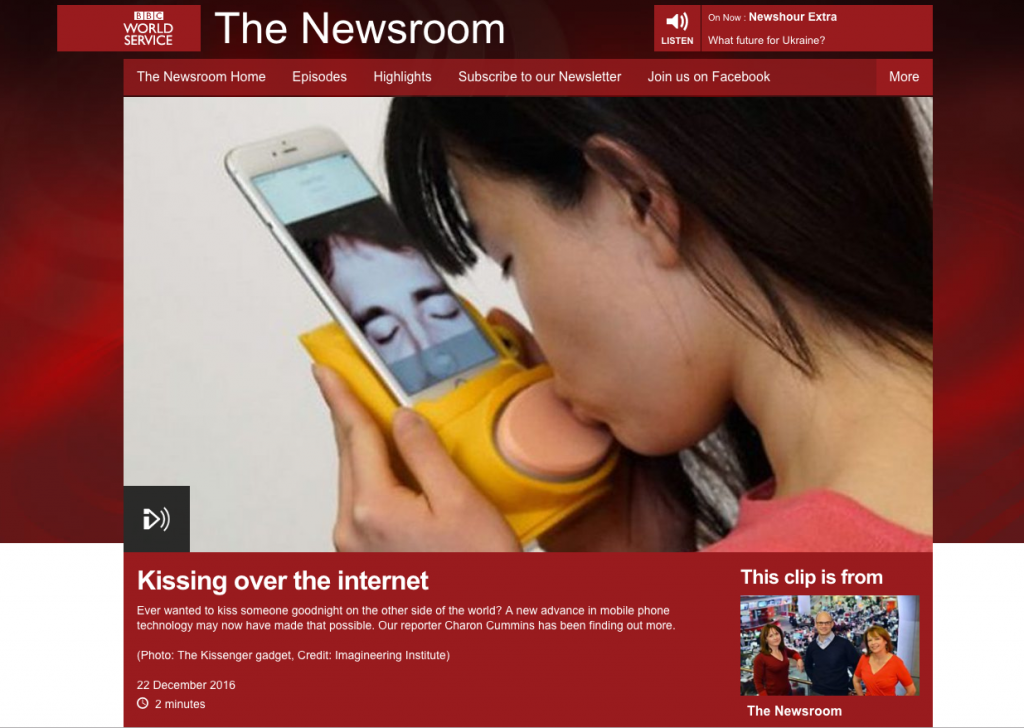
Among the philosophical discussions, there was also opportunity to showcase some eye-catching gadgets. There was the Teletongue, a pair of ear-shaped lollipops developed by researchers at Keio University in Japan, programmed to react to each other based on the users’ licking sounds and movements. There was also a device named Kissenger, which connected two mobile phones for a “Real-time Internet Kiss Communication Interface.” Its creator, Emma Yann Zhang, explained that such haptic devices were actually very effective in conveying feelings and emotions and helping to evoke a sense of presence in a remote environment. According to her, the importance of physical interaction to the quality of our relationships is still grossly underestimated.

This is something that Ghislaine Boddington has been researching for over 20 years. She believes that so-called “body technologies” have enormous potential to connect people romantically, emotionally, physically and sexually through devices that blend with our physical selves. She coined the term “Internet of bodies” to describe the way that such devices will eventually enable us to network our responses, giving a whole new meaning to “keeping in touch.”

“Physical intimacy goes way beyond sex, or even romance,” she explains. “It’s rather about attachment, and this includes how we feel about each other, our environment and all the objects that surround us. What excites me now is actually the convergence of these technologies and bringing them into our bodies to create new types of intimacy and hyper-enhanced sensualities.”

We already live in a world where technology is so embedded in our lives that most of us don’t realize how often we check our phones. But the next logical steps in that relentless integration between mind, body and tech might see us do away with those artificial interfaces altogether. We would, quite literally, embody out technology.

Read on for a few technologies that could bring about this sensual revolution.


FROM WEARABLES TO IMPLANTS
Boddington believes that our quest to augment our existence and indulge in new experiences will lead us to turn our bodies into “digital interaction canvas.” Our relationship with technology has already become much more intimate since the widespread adoption of devices like the FitBit, which monitor a broad range of physical data, but wearing such devices around the clock can have its drawbacks. The next generation of wearables is likely to be much less cumbersome and intrusive, such as DuoSkin tattoos made from gold leaf. They’re not only quite beautiful; they’re easily customizable to a variety of designs and can be used to control a variety of mobile devices. “Through the user-friendly fabrication process, we enable people to design and create their own skin technology,” explains Cindy Hsin-Liu Kao, the MIT researcher leading the project. The transfers communicate using NFC tags made from chips connected to coils and are surprisingly hard-wearing, comfortable and inexpensive.
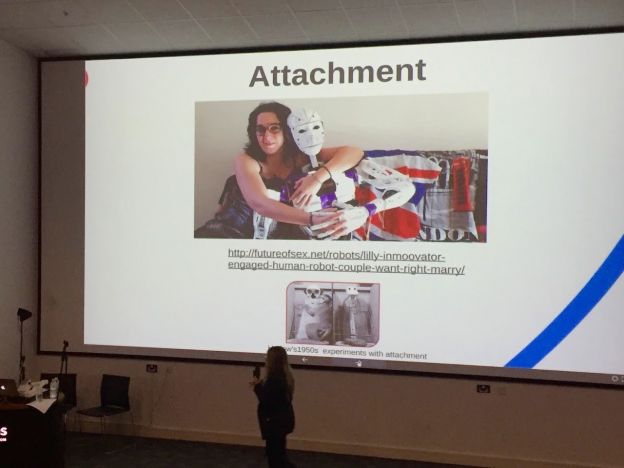
**A speaker at Love and Sex with Robots** Image courtesy of the conference
A speaker at Love and Sex with Robots Image courtesy of the conference


The next logical step, then, would be for implants to become increasingly accepted, and we’re already much further along that path than you might think. When Donna Haraway published her seminal Cyborg Manifesto back in the 1990s, she pointed to many kinds of common implants. That number has gone up dramatically since then, ranging from tooth and breast implants to pacemakers and devices that provide deep brain stimulation to Parkinson sufferers. Tiny implants in your hand can already replace accessories like a payment card or key fob, and we will see this become a lot more pervasive in years to come.

“There are probably over 200 kinds of implants around at the moment,” says Boddington, “and these are all very programmable. So as these become increasingly integrated into our lives and less of a taboo, we’re potentially looking at a sort of ‘body hacking’ scenario that takes us beyond this traditional—and rather artificial—mind-body separation.”


PROGRAMMABLE GELS
One rather mind-blowing possibility is that of embedding nanotechnology in gels, which could be used to stimulate our erogenous zones. This type of technology effectively means that microscopic robots within the gels can be programmed to collect data from our body and react to it according to our preferences.

Boddington makes clear that this type of application is still speculative, but the technology itself already exists and is being used (no pun intended) to lubricate robot joints.

“There’s nothing to stop us developing this into gels we could apply to our erogenous zones,” she explains. “These could provide straightforward tactile stimulation, or help you sync your reactions to that of your partner.” We could even be looking at scenarios where data from your body could be used to personalize virtual reality content in real time to fulfill needs and fantasies you didn’t even know—or admit—you had.


VIRTUAL PRESENCE
Advances in virtual reality will help us create a sense of “hyper-presence” which will allow us to project ourselves into virtual worlds in unprecedented ways, according to Boddington. That might be hard to imagine in the context of the cartoon-like avatars we see in most VR platforms these days, but advances in technologies such as morphing, sampling and 3D-scanning will soon allow us to create much more personalized avatars capable of conveying emotion.

The importance of realistic movement is something that she’s very aware of, coming from a dance and performing arts background: “The intimate interplay between body language and presence is a key part to enabling a sense of full immersion in VR,” she explains. “Touch, caress gaze, it all feeds into it. The way your skin brushes against another, the feel of a heartbeat or the sound of someone’s breath. Over the next 10-15 years, we will see a convergence of these technologies with things like virtual and even mixed Reality holograms to enable ways for us to meet each other and be intimate in new ways, whether you’re in the same room or over distance.”

The most exciting possibilities of the next decade are therefore not in creating autonomous machines to be become our proxy lovers, but in incorporating those machines into our own bodies, creating a true symbiosis between our “real” and “virtual” identities. When the wealth of data collected by these embedded devices is leveraged to connect our bodies both to our fellow humans and to other machines, it will open up an entirely new array of possibilities. It could forever change how we relate to our physical selves. Pleasure, sexual and otherwise, would no longer be tethered to any particular space and time; It would live within us.




Quirky New Device Lets You to Send a Kiss to Your Long-Distance Love

my-modern-met-logo-e1459274308618


By Kelly Richman-Abdou – December 31, 2016 – My Modern Met

Quirky New Device Lets You to Send a Kiss to Your Long-Distance Love

With the tremendous advancements in technology today, long distance relationships have never been easier to maintain. While video chats and WiFi-enabled messaging services take away some of the trials and tribulations of cross-country courtships, you can now skip the Skype kissy faces and lock lips with your long distance love through Kissenger.

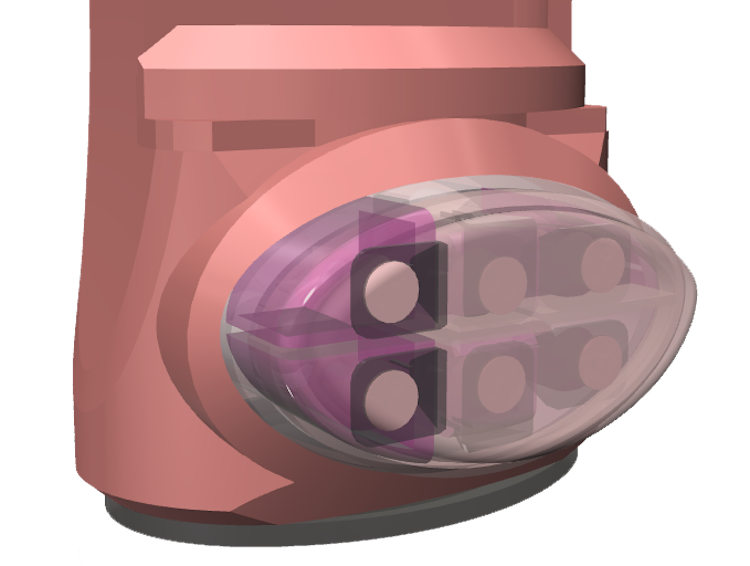
Aptly named for its comical combination of a kiss and a virtual messenger, the gizmo allows you to “kiss” your loved one from afar. While the quirky invention may seem straight from the future, it’s actually very simple: composed of plastic, motors, and a large, silicone pad (nothing says romance like a large, silicone pad!), each apparatus attaches to a smartphone.

The “kiss” is stimulated by a motorized mechanism beneath the silicone that applies a unique patter of pressure to the lucky recipient’s lips or cheek. While it’s geared toward wistful romantic partners, the peculiar product also promises to bring families closer together and even unite fans with their celebrity idols.


Kissenger Kiss Messenger
While the device claims to be “the world’s first mobile kiss messenger,” it’s not the only one on the market.


Kissenger Kiss Messenger
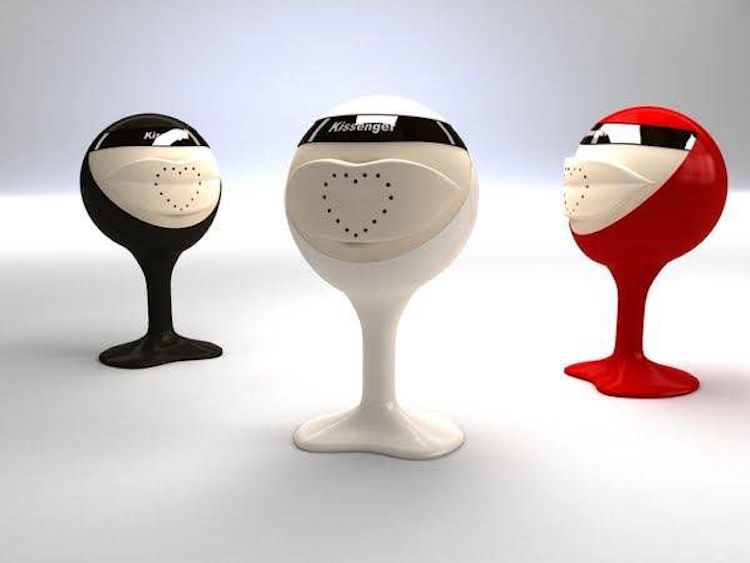
There’s another Kissenger that also uses motors and silicone to simulate a smooch.


Kissenger Kiss Messenger
There’s another Kissenger that also uses motors and silicone to simulate a smooch.


Kissenger Kiss Messenger
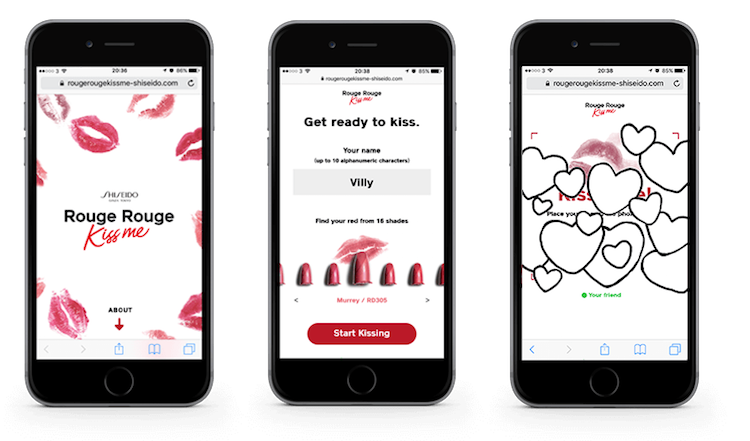
And Rouge-Rouge Kiss Me is another app that lets you send a colorful kiss to your loved ones.

Love and Sex With Robots

canada

By Julie Wosk – December 22, 2016 – The Huffington Post

http://www.huffingtonpost.com/julie-wosk/love-and-sex-with-robots_b_13786384.html


2016-12-22-1482404766-6562917-kissenger.png


Sending kisses long distance has become easier. In the past, people used written letters (maybe a woman left her lipstick imprint on an envelope sealed with a kiss). Then there were the sounds of kisses on the telephone, xoxo on emails, air-blown kisses on the internet, Skype and more. Now researchers have further developed new ways for people to communicate their affection and intimate feelings long distance in the digital age.

Developers at Lovbotics created the “Kissenger” system billed as “The World’s first mobile kiss messenger” which lets users press their lips into the soft lips of a cute little round device laden with sensors. When nested to a mobile phone with a special app, Kissenger transmits the pressure of their lips through a real-time data stream over the internet to a person far away who holds up their own little device to their face. A small module with the device even reproduces the sender’s scent (could be body odor or perfume) and the receiver—it is said— can even detect the sender’s chemical pheromones.

At the Goldsmiths University of London conference “Love and Sex With Robots” held December 19-20, 2016, one of Kissenger’s developers Emma Yann Zhang of the City University London demonstrated the kissing machine robot to audience members eager to try it for themselves. Said one kiss recipient, laughing, “I miss the wet feeling of a kiss.”

Zhang said she and other developers (at Japanese and Malaysian universities) aim to someday implant Kissenger in a robotic head made of silicone or in a humanoid robot like Anita, the character in the popular British/American television series Humans. She mused that Kissenger could also be useful for online dating if a woman wanted to detect if a man was a good kisser before she even met him (Zhang felt this factor was especially important to women).

The conference also yielded some other gadgets for communicating affection long distance. Teletongue, a project being developed at Keio University in Japan, lets users lick what looks like a human ear (made using 3D modeling) which has an embedded microphone and sensors. The sound of their licking—and the vibrations—are transmitted through a computer to a friend who holds a “lollipop” device. The developers, including Daisuke Yukita, say the device is a “natural way of enhancing and enjoying intimate relationships.”

These devices with their promise of virtual affection fit right in with the idea of sex robots (sex robots with artificial intelligence aren’t ready yet but are slated for production by California’s RealDoll, Abyss Creations sometime in 2017). Whether virtual kisses and digital licks are a good substitute for the real thing—-now that can be debated, but they certainly look like fun.


Robot Phone Device Transmits Kisses to Your Loved Ones When You’re Away

gizmodo-logo

By Rhett Jones – December 25, 2016 – Gizmodo

http://gizmodo.com/robot-phone-device-transmits-kisses-to-your-loved-ones-1790482894


Photo: Emma Yann Zhang


Holidays can be a rough time for those who are truly married to their jobs but also have a human that they love in their spare time. Enter the Kissenger, a new smartphone peripheral that allows anyone to send a smooch live via video chat.

Named after former Secretary of State Henry Kissinger* who rained bombs on millions of people from half a world away, the device is simple. It’s a little larger than a protective case and has an oval silicon “lip” at the bottom. High precision force sensors register a user’s lip movements and miniature linear actuators replicate those movements on the device of the person being kissed.

It’s easy to imagine that this could make lovers feel like kids again, always anticipating that moment of the kiss. An awkward conversation plays out about how the flight was, while their eyes drift towards that big, freshly sterilized silicone pad. Waiting, longing.

But, Kissenger is more than just a way to maintain intimacy. Emma Yann Zhang, the creator of the device, presented it at this week’s Love and Sex with Robots conference. She believes that humans will inevitably become more intimate with A.I. or robots and that the ability to share a kiss could be an important factor in that bond. She also makes it clear in a recent report that “this research will not attempt to conclude whether it is ethically acceptable to have intimate relationships with robots.”

As with any communication technology, the project is also about collecting data. Researchers will record statistics about blood pressure and heart rate in lab tests to see if users can be affected in the same way that they are by a real kiss. And eventually, Kissinger’s creators hope to pass the Turing test. Will lab subjects be able to tell the difference between a kiss from a person and a kiss from a computer simulation?

Kissinger is Zhang’s PhD project and she plans to continue with her research at the City University London lab of Adrian Cheok. We probably shouldn’t expect a product for consumers very soon.

*this project is not named after Henry Kissinger, its name is a combination of kiss and messenger.


Sex robots would give us only what we think we want, and not what we truly desire

The-Telegraph-logo-350x150

By Rowan Pelling – 21 December, 2016 – The Telegraphy

http://www.telegraph.co.uk/news/2016/12/21/sex-robots-would-give-us-think-want-not-truly-desire/


A robot built to look like Scarlett Johansson. She was not involved in its creation
A robot built to look like Scarlett Johansson. She was not involved in its creation. CREDIT: BOBBY YIP/REUTERS


Nothing says Christmas like a conference called “Love and Sex with Robots”. While many spent the week contemplating the birth of a baby two millennia ago, Goldsmiths University played host to the second international congress on congress with machines. One of the team said drily that it was great to see such a large number of journalists at a specialist academic gathering.

I can’t have been the only person to have shifted guiltily in my lecture theatre seat. There’s no doubt the topics under discussion were fascinating for anyone familiar with Blade Runner, Westworld, Humans and even Austin Powers, where human attraction to robots is a key theme. A study cited by one of the speakers reported that around 40 per cent of men would happily purchase a sex robot given half a chance.

At this point an American colleague looked up TrueCompanion.com (“The World’s First Sex Robot”) on her mobile and showed me a 10-grand example of their wares, who bore a startling resemblance to Melania Trump. Then Emma Yann Zhang, a computer science PhD student, took to the floor to demonstrate her “Kissinger” device, which transmits simulated lip-on-lip pressure to loved ones via a mobile phone app. You rather wonder what the not-entirely-peacenik Henry K makes of his smooching namesake.


Posts navigation