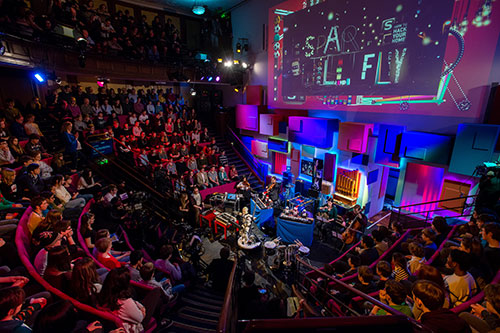
City’s Department of Computer Science is prominently featured in the 2014 Royal Institution Lectures

22 December 2014

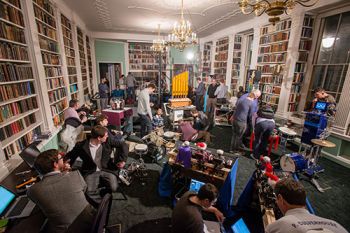
During this year’s distinguished annual event, schoolchildren were treated to a robot orchestra performance and a taste of the electric lollipop developed by City’s Professor Adrian Cheok.
RI_lectures3

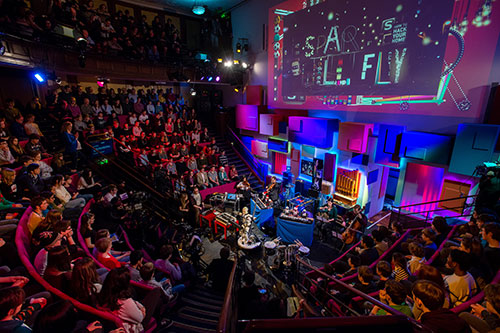
City’s Department of Computer Science has played a prominent role in the 2014 Royal Institution (RI) Christmas Lectures, which were presented by Professor Danielle George, with the theme, ‘Sparks Will Fly’. The lectures will be broadcast on BBC Four at 8pm on December 29th, 30th and 31st.
featured


The RI Christmas Lecture Series, regarded as an annual highlight for a science event addressed to young people, is a series of talks on a single topic. The lectures have been held at London’s Royal Institution each year since 1825, except for the period 1939-1942 due to the Second World War.

 
Michael Faraday initiated the first RI Christmas Lecture Series in 1825 at a time when organised education for young people was scarce. Since then the lectures have followed a tradition of presenting scientific subjects to a general audience in an informative and entertaining manner.
featured (2)


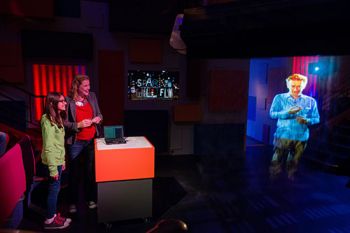
During this year’s RI lectures, opportunities were provided for children in the audience to test out the world’s first electrical lollipop and Scentee smartphone smell app developed by Professor Adrian Cheok’s pervasive computing research team. PhD students Emma Yann Zhang, Gilang Pradana and visiting researcher Shogo Nishiguchi helped to demonstrate the taste and smell devices in the Royal Institution. The lecture will be broadcast on BBC Four on 30th December at 8pm.
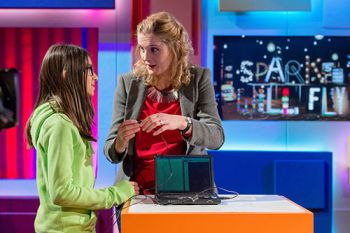


featured (1)


Young volunteer Zara Rashid, 11, of Henrietta Barnet School in Hampstead, said:
“I thought the electronic lollipop was really cool, it was hard to work out exactly what the flavour was with just the lollipop but when there was a smell as well that made the taste much sharper. I really enjoyed the Christmas Lectures!”




http://www.city.ac.uk/news/2014/dec/citys-department-of-computer-science-is-prominently-featured-in-the-2014-royal-institution-lectures/


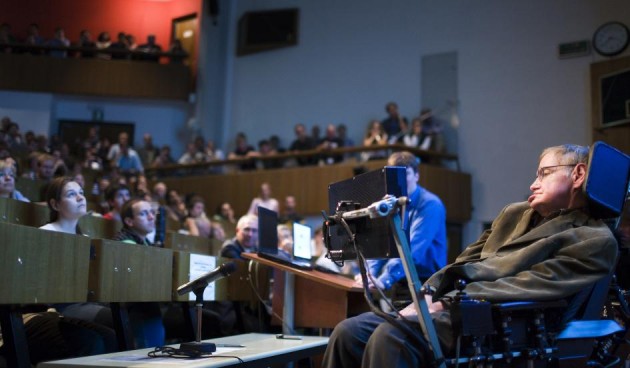
Stephen Hawking: Sentient Machines ‘Could End Human Race’

newsweeklogo


‘Humanoid’ robots are the future, pupils are told

83706079

by Andrew Robinson

17 Nov 2014, 16:17

scientists are creating lifelike robots which may one day help with the household chores or care for the sick, Yorkshire pupils were told.

Robots have long been touted as the solution to a lot of mankind’s problems and yesterday scientists were just as optimistic about what the future might hold.

Pupils aged 11 and 12 from Horizon Community College in Barnsley met world-renowned ‘roboticists’ at Sheffield University.

The practical event was hosted by Professor Hiroshi Ishiguro from Osaka University in Japan and Professor Adrian Cheok from City University in London.

Professor Ishiguro’s laboratory developed Geminoid, a robot with lifelike appearance including facial movements.

Pupils took part in a demonstration of ‘humanoid robots’ developed by Professor Ishiguro and had the opportunity to develop and programme their own Lego robot.

They also learned about the history of robots and how they can be programmed to learn and behave in a human-like way.

The workshop event was hosted by Sheffield Centre for Robotics as part of its outreach activities.

See full post with video on: http://www.yorkshirepost.co.uk/news/main-topics/general-news/humanoid-robots-are-the-future-pupils-are-told-1-6957443


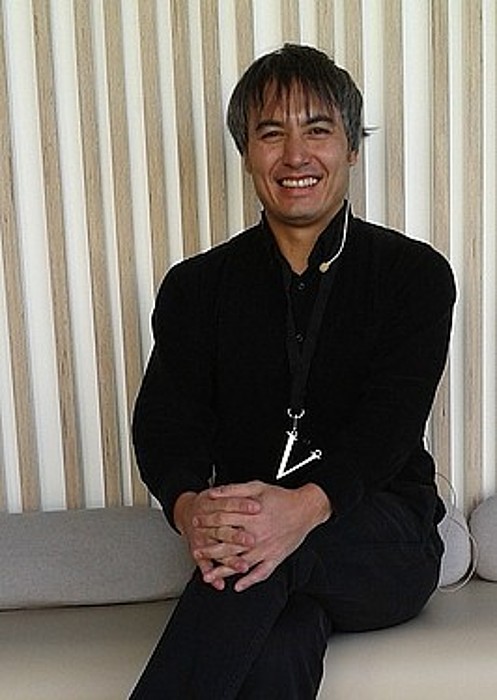
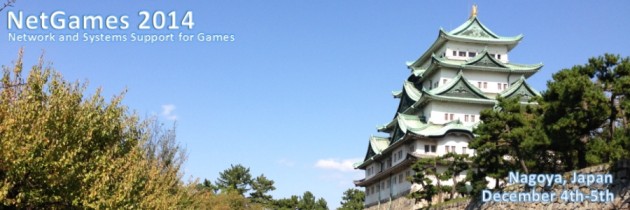
Adrian Cheok Keynote Speaker of Netgames 2014, Nagoya, Japan

main_pic_nagoya

NetGames 2014

Nagoya, Japan, December 4th-5th, 2014

Keynote: Everysense Everywhere Human Communication

Adrian D. Cheok (City University London, UK)

Date: Dec 4th, 9.30 – 10.30am

Abstract: This talk outlines new facilities that are arising in the hyperconnected internet era within human media spaces. This allows new embodied interaction between humans, species, and computation both socially and physically, with the aim of novel interactive communication and entertainment. Humans can develop new types of communication environments using all the senses, including touch, taste, and smell, which can increase support for multi-person multi-modal interaction and remote presence. In this talk, we present an alternative ubiquitous computing environment and space based on an integrated design of real and virtual worlds. We discuss some different research prototype systems for interactive communication, culture, and play.


Posts navigation