
10 Lessons from “Leading” with Alex Ferguson

Dear Friends,

Leading is a masterful guide to great leadership on Sir Alex Ferguson, written by Sir Michael Moritz. Embedded within the sharing by Sir Alex are relevant lessons for entrepreneurs who want to build enduring companies.

1. Build strong basic foundations. Ferguson created a structure for the long term by restructuring the youth and scouting program. Early signings included Ryan Giggs and David Beckham. I can think of similar examples where some of the most important hires by our technology companies are young unproven people hungry to win.

2. Recruit, train and promote young people. They’ll be loyal, they’ll climb mountains for you, and they’ll take on many of your values, notes Ferguson, who became famous for spotting and developing players when they were young.

3. Fire people early. When Ferguson took over United in the 1980s, it was a mediocre club with the wrong players and culture. It took him years to change that into one reflecting his values. In retrospect, he says, he should have switched out more people sooner. This is quite pertinent for technology companies as a wrong hire has a dispropotionate negative impact on a company’s growth.

4. Dare to rebuild teams. He assembled five distinct league-winning squads during his time at the club and continuing to win trophies all the while. “He’s never really looking at this moment, he’s always looking into the future,” Ryan Giggs.  The world won’t stand still and nor can you. “(A)t United we effectively rebuilt the team on four-year cycles,” Ferguson recalls.

5. Show up. Leaders underestimate just how important their simple presence is, Ferguson says. He recalls a player complaining about his absence even from a training session. In total, he says he missed just three of United’s 1,500 professional fixtures during his tenure — an astonishing record.

6. Set high standards—and hold everyone accountable.
Ferguson speaks passionately about wanting to instill values in his players. More than giving them technical skills, he wanted to inspire them to strive to do better and to never give up—in other words, to make them winners.

7. Never, Ever Cede Control. “You can’t ever lose control—not when you are dealing with 30 top professionals who are all millionaires,”

8. Stay clear-headed in negotiations. Ferguson: “It’s hard to remain clear-headed during negotiations and not get swept away by the passion of the pursuit or emotion. It’s so easy to get over-stretched…If discipline slips during a negotiation it can have all sorts of ramifications. Not only does it drive the price up for a particular transaction, but it has ripple effects. In football, just as in other businesses, it means that people now expect you to pay top dollar.”

9.  Focus on the big things. Like many people who’d watched United from afar, I’d assumed Ferguson kept an iron grip on every detail of the club. Not true, it seems. Ferguson says leaders need to learn to delegate and manage through others. And he recalls learning early on how much more valuable it was for him to take a step back from the team’s daily practice sessions and watch from the sidelines, where he could see everything, than to take the field and try to coach them himself. That lesson, he recalls, “was the making of me.”

10. Pick values over talent. Ferguson is famous for developing or signing some of the greatest soccer players in history, but says: “If I had to choose between someone who had great talent but was short on grit and desire, and another player who was good but has great determination and drive, I would always prefer the latter.”


Amplify’s Urban Resilience Challenge Winner! See the winner that has the potential to improve the resilience of urban slum communities around the world

Go to this link to read:


https://challenges.openideo.com/challenge/urban-resilience/wining-ideas?utm_source=OpenIDEO+Challenge+News&utm_campaign=b314013d71-&utm_medium=email&utm_term=0_ba905080b1-b314013d71-303550685


⚡️ 5 Step Formula For Entrepreneurial Success

unnamed

Greetings!  We help brands and businesses innovate quickly by hooking them up with the world’s best entrepreneurs. Each week we will see if you have a solution to our latest brand brief, we’ll provide some entrepreneur tips and share some fun & interesting stories.
?Latest Bakery Brief  

“A Global FMCG brand with billions of dollars of sales in the refreshment sector (hot/cold drinks & ice cream) are looking for innovative or early-stage partners to help them find new ways to market and sell their products. M-Commerce, subscription based delivery, new portals, new formats for drinks and micro/artisanal solutions are all of interest.” 

If this is you or someone you know, please get in touch charlotte@thebakerylondon.com

? Entrepreneurial Tips – TED TALK

This is a fantastic Ted Talk by Dame Stephanie Shirley in this frank & hilarious talk, she explains why she went by “Steve,” and why ambitious women have flat heads.

? The BakeryBitesize

Every Friday we feature our #BakeryBitesize weekly tech roundup on our blog. Below is a snippet from last week’s bitesize. Click on it to see more.

? Top Blog

This week’s must-read blog is by Ev Williams (Founder of Medium) on the Formula For Entrepreneurial Success. 

?  Bakery News 

We have an upcoming Inspiration Day in March happening in Birmingham and we are looking for exciting tech companies to pitch at this event. If you are interested in this opportunity please get in touch (charlotte@thebakerylondon.com)

? Thought Of The Week

Have a great week!

The Bakery Team ⚡️


No more independent contractors for this gig economy startup

By , USATODAY


SAN FRANCISCO – A home health care company that got $20 million in venture funding based on its gig-economy model is turning its workers into traditional employees with benefits.

Honor announced Wednesday it has decided to shift to a traditional workforce model, making employees eligible for benefits, worker’s compensation and stock options. Previously they had been independent contractors with none of those benefits.

The company launched earlier this year with funding from venture capital firms Andreessen Horowitz and Kapor Capital, PayPal co-founder Max Levchin and former senator Bob Kerrey.

Honor was initially envisioned as a network of gig-economy care providers who could be matched with assignments via a smartphone app and were paid on assignment. But as the company grew, it realized it needed to change its fundamental employment model.

“What’s become clear is that care professionals actually want long-term relationships,” said CEO Seth Sternberg.

The change comes as other on-demand companies face pushback from workers and investors about their labor structure. Companies like Uber, Lyft and others built on a model of independent contractors are operating in an evolving legal landscape punctuated by a high-profile lawsuit in California.

In December, a federal judge in San Francisco allowed an expanded case by Uber drivers in California who said they are employees and should be reimbursed for expenditures or losses incurred during the discharge of their duties. The trial is set for this summer.

The threat of lawsuits had “created a level of uncertainty for a lot of people, not just employers,” said James McQuivey, an analyst who studies gig economy companies for Forrester Research.

WORKER CHURN

Sternberg said Honor’s decision had nothing to do with looming lawsuits. Instead, it was a response to worker churn.

Home health care traditionally experiences tremendous turnover — 60% a year according to the Paraprofessional Healthcare Institute. To keep, train and stabilize its workforce, Honor realized it needed to provide better care to its caregivers, Sternberg said.

“It turns out seniors and their families are using us for months, not just for an hour here and an hour there. It’s a long-lived relationship,” Sternberg said.

Bringing its workers on as traditional employees will allow Honor to train its staff, “so it’s no longer just a dead-end job. People perform much better when they have a path up,” he said.

Honor employees will now have employee status and compensation, workers compensation, paid sick leave, the chance for training and advancement and, for full-time employees, health benefits and company stock participation.

The San Francisco-based company currently offers services in the San Francisco Bay area and greater Los Angeles.

‘RANDOM PEOPLE OFF THE INTERNET’

Home health care is a market where employees make sense, said Barry Asin, president of Staffing Industry Analysts, a labor analysis firm.

“That’s not the sort of thing where random people off the Internet are going to be trusted to come into your home,” he said.

That said, there are situations, and workers, for which a free-agent model is a better fit. Not everyone wants a typical employment model, “where you’re told when to come to work — and you better show up or you won’t keep working,” he said.

In the end, the courts will decide how these workers should be classified, and it’s not at all clear what the outcome will be. “There’s a good case be made for them to be independent contract and a good case for them to be employers,” Asin said.

As for Honor, the change could benefit or harm the company, depending on how well it’s handled, said Ben Ling, a partner at Khosla Ventures, which invests in consumer health and other businesses.


In a bad mood? Take a whiff of your cellphone | Guardian

guardian_logo_square

Tech innovators are adding a fourth dimension to gadgets and devices: the sense of smell

4000
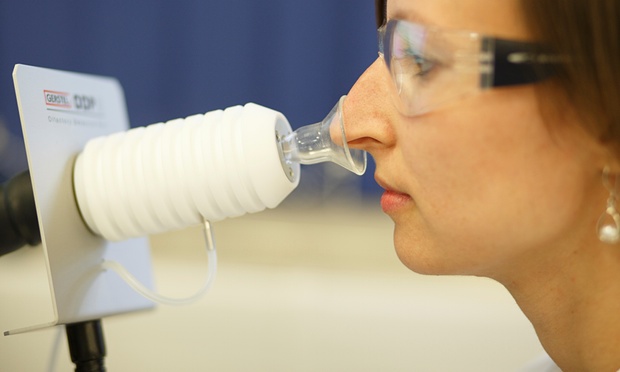
This device analyzes aromas at Reading Scientific Services, part of Reading University in the UK. Such research could help product developers create digital scent experiences that better mimic the real world. Photograph: Frantzesco Kangaris for the Guardian


Smell remains the most mysterious of the human senses ­­– scientists are still trying to explain why one scent is pleasant to some people and offensive to others, how fragrances conjure memories from years past, and how aromas influence behavior.

“The relationship between individual aromas and emotions can vary considerably from one person to another,” says Beverley Hawkins of the West Coast Institute of Aromatherapy. “There is no guarantee that two people smelling the same aroma will trigger the same memories or emotions. In fact, more often than not, they will not.”

A study released earlier this year by the Proceedings of the National Academy of Sciences (PNAS) supports Hawkins’ thought. Researchers found that the genes the body uses to detect scents vary up to 30% in any two given individuals. They concluded that each person has an “olfactory fingerprint” that triggers a unique reaction to the same odor molecule.

On average, a person experiences about 10,000 scents in a day. “Accordingly, it only makes sense that some of these are more pleasing than others to your senses,” says Elizabeth Musmanno, president of theFragrance Foundation. “And this in turn absolutely affects your mood.”

Making smell digital

Scientists have long known that the sense of smell serves as a type of bodyguard, warning people about dangers such as spoiled food or a fire. And there is a clear connection between the sense of smell and the sense of taste. Yet despite their strong impact on our bodies, those two senses are often not at the forefront of our minds as we go about our daily routines – mealtimes being the exception, of course.

“All nutrients that enter our body are monitored by the senses of taste and smell, so these senses are very important in general,” says Dr Richard Doty, director of theSmell and Taste Center at the University of Pennsylvania. “Unfortunately they are taken for granted until they become injured or otherwise disabled.”

That could change as product developers move closer toward creating digital experiences that better mimic the real world. For example, Oscar Mayer collaborated with computer scientist Adrian Cheok to design a phone attachment that releases the scent of bacon – and plays the sound of frying – at a preset time. The Wake Up and Smell the Bacon project won the Most Creative Use of Technology prize at the 2015 Shorty Awards.

Another recent invention is the Ophone, a device invented by Harvard University biomedical engineers that allows users to send “smell messages” in a method that’s akin to texting. Also, the Japanese company Scentee has built odor cartridges that attach to a phone’s earbud jack. One intended use is to trick a user’s tastebuds into believing he’s eating, say, a delicious steak instead of a bland salad – a nice way to make dieting more enjoyable.

Musmanno notes another emerging trend: scenting environments. A store can try to create an inviting place for shopping, a hotel may want to convey the scent of luxury or a 4D movie will perhaps use aromas to tell a story.Glade explored the connection between scent, emotion, and interactive and sensory experiences at its Museum of Feelings exhibit in New York City during the holiday season. Visitors walked through a variety of galleries that were inspired by fragrances and learned about how scent impacts emotions.

Advances in scent technology could also stretch to the workplace. Doty imagines a future in which businesses use smells to boost employee performance. “I can foresee the use of odors in public places such as lobbies of buildings to energize workers,” he says. “This has to be done carefully, however, as some people are allergic to certain odors.”

And then there’s virtual reality. For now, VR headsets are able to produce a fairly realistic replication of scenery and human interactions via two senses: sight and hearing. However for a true real-world experience, the other senses will have to be stimulated, too. “Most likely, smells will be included in virtual reality scenarios just to enhance the experience,” says Doty.

There are challenges in turning scents digital, as they’re not nearly as adaptable to mass electronic distribution as images and sound. However, “as we continue to learn more about our sense of smell and what it can do, there will most likely be more applications in the future”, Musmanno says.

“Scent will definitely be part of the evolution of technology. The more the sense of smell is studied, the more amazing it is discovered to be.”

This content is paid for by SC Johnson


Posts navigation